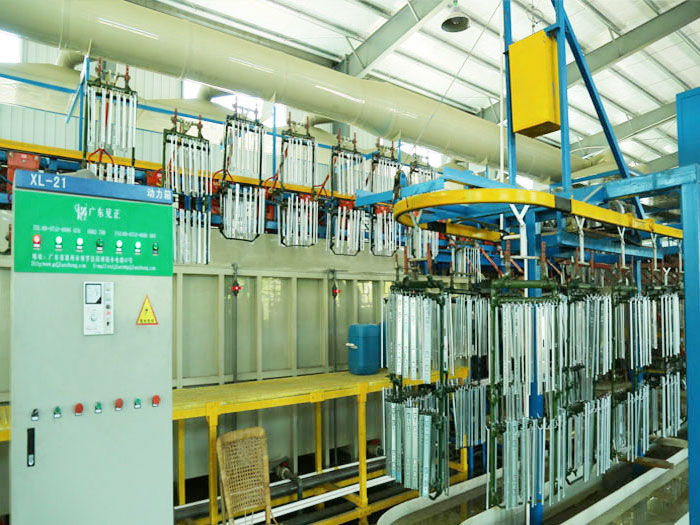
Gantry-type Electroplating Production Line (also known as crane-type electroplating line) achieves automated transfer of workpieces between electroplating processes through mechanical gantry arms. Its core features are reflected in structural flexibility, efficiency, process adaptability, ease of maintenance, and environmental and energy-saving characteristics, as outlined below:
1. Structural Flexibility: Modular Design to Meet Diverse Production Needs
Flexible Track Layout
The gantry track can be arranged in straight, circular, or multiple rows, adapting to different factory space layouts. For example, a straight track can be arranged in single, double, or triple rows, with transitional devices used to achieve cross-row transfer; circular tracks use mechanical linkage devices to allow continuous cycling of workpieces, reducing the footprint.
Diverse Gantry Types
Depending on the load capacity and workpiece size, gantry arms can be single, double, or multi-arm structures, with load capacities ranging from 10 kg to several hundred kilograms. The cantilever gantry arms typically have a length of around 1.2 meters, with plating tanks ranging from 0.8 to 1.2 meters in length, suitable for small parts; gantry-style arms are arranged on both sides of the track and operate smoothly, ideal for large workpieces.
Ease of Installation
The cantilever gantry arm tracks are fixed to vertical supports and do not rely on building structures, allowing flexible installation within the factory. Electrical control components are placed away from the tank edges, making maintenance easier and providing corrosion resistance.
2. Efficiency: Automated Transfer Increases Production Efficiency
Tightly Integrated Processes
The mechanical gantry arms enable fast transfer of workpieces between processes like oil removal, pickling, electroplating, and cleaning, reducing manual operation time. For example, a certain production line optimized the lifting process, shortening the cycle time to minutes, improving efficiency by 60% compared to traditional methods.
Adjustable Operating Speed
With variable frequency drive technology, the gantry arm's speed can be adjusted continuously between 6-40m/min, meeting different process requirements for transfer speed. For example, it runs at a medium speed of 18-20m/min between adjacent tanks, and can reach 36-40m/min at high speed during continuous multi-tank operations.
High Load Factor
In a circular production line, the length of each process tank is determined by the process time, and the tanks are usually at full load, leading to high equipment utilization. For example, in a certain circular production line, the longer the processing time for a given product and the fixed pitch of the conveyor chain, the longer the production line, but the output per unit of time is higher.
3. Process Adaptability: Meeting Diverse Electroplating Requirements
Multi-Plating Compatibility
Supports multiple plating types such as zinc, copper-nickel-chrome, and aluminum anodizing. By adjusting process parameters (such as current density and electrolyte composition) and changing fixtures, quick switching between different plating layers can be achieved. For example, a certain production line can complete both zinc and nickel plating processes on the same line by changing fixtures and adjusting current.
Wide Range of Workpiece Sizes
It can handle everything from small electronic components to large metal parts. The cantilever production line is suitable for small parts (such as printed circuit boards) with arm lengths up to 4 meters; the gantry production line can lift large workpieces (such as automotive wheel hubs) with load capacities of several hundred kilograms.
Support for Special Processes
Some production lines are equipped with roller drive mechanisms that rotate rollers above the plating tank, allowing residual liquid to drip back into the tank, reducing the amount of solution carried into the cleaning water and saving wastewater treatment costs. For example, a certain roller-plating production line uses rotating rollers to reduce residual moisture on electroplated parts, which is then centrifuged and dried without water marks.
4. Easy Maintenance: Reducing Operational and Maintenance Costs
Modular Design
Key components (such as tracks, drive wheel systems, and electrical control elements) are modular, making replacement easier and reducing downtime. For example, a certain production line shortened repair time from 48 hours to 8 hours by replacing the damaged drive wheel module.
Strong Corrosion Resistance
Tracks and electrical components are placed away from the tank edge, reducing corrosion risk. For example, electrical control components on the cantilever gantry arm are positioned away from the tank edges, making maintenance easier and extending their lifespan.
Easy Fault Diagnosis
Equipped with an intelligent monitoring system, real-time tracking of gantry arm status (such as speed, position, and load) is possible. Fault codes are automatically recorded and displayed, facilitating quick troubleshooting. For example, a certain production line detected wear on the drive wheel in advance via the monitoring system, preventing equipment downtime.
5. Environmental and Energy Efficiency: Meeting Green Production Standards
Optimized Wastewater Treatment
Uses counterflow rinsing and micro-emission technologies to automatically replenish and recover cleaning concentrated wastewater based on electrolyte surface evaporation, saving 95% of water usage, with a heavy metal recovery rate of 98%. For example, a certain production line increased cleaning water recycling rate to over 90% through a counterflow rinsing system.
Efficient Energy Use
Equipped with energy-saving heating/cooling devices that automatically adjust temperature according to process needs, reducing energy waste. For example, a certain production line reduced heating energy consumption by 20% through a smart temperature control system.
Complete Waste Gas Treatment
Equipped with waste gas treatment devices to ensure harmful gases (such as acidic gases and volatile organic compounds) produced during electroplating are properly treated, with emission concentrations strictly controlled below standard limits. For example, a certain production line reduced volatile organic compound emissions to below 5 mg/m³ through a waste gas treatment device.