Vertical Lift Rotating Electroplating Production Line is an efficient, flexible, and highly automated electroplating equipment, suitable for large-scale production of medium and small workpieces, especially widely used in the ABS plastic electroplating hardware industry. Therefore, the Vertical Lift Rotating Electroplating Production Line demonstrates significant advantages in the electroplating industry with its unique structural design and technical characteristics. Its core advantages can be summarized in the following five aspects:
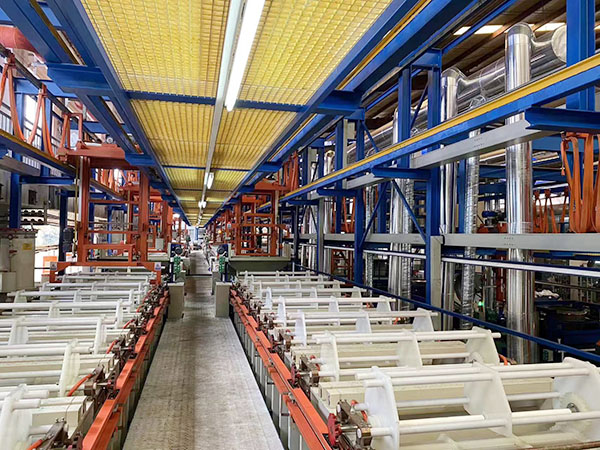
1. High Automation, Dual Improvement in Production Efficiency and Quality
Full Process Automation Control
This production line uses a computer-controlled automation system and a programmable logic controller (PLC), with precise and simple operation. By setting predefined process parameters, key indicators such as speed, time, and temperature can be adjusted freely, reducing manual intervention, avoiding operational errors, and ensuring the stability and consistency of the production process.
Multi-process Synchronized Operation
The circular track design enables the lifting device to operate along a "0" or "U" shaped track. Every time a workpiece completes a full rotation, it goes through all processing steps (such as pre-treatment, electroplating, post-treatment, etc.). This parallel processing mode significantly shortens the production cycle, making it especially suitable for large-scale production needs.
High Capacity Output
The combination of automation and parallel processing endows the production line with high capacity. For example, a certain model’s production cycle can be adjusted to 30-120 seconds per piece, with a daily output of thousands of pieces, meeting large-scale production requirements.
2. Flexibility, Meeting Diverse Production Needs
Independent Lifting Control
Each electroplating tank is equipped with an independent vertical lifting device, which can be flexibly adjusted in height according to process requirements. This design allows the production line to handle workpieces of different shapes and sizes (such as small hardware, ABS plastic components, etc.), and even supports customized electroplating needs for irregular parts.
Multi-process Compatibility
By programming control, the production line can quickly switch between different plating processes (such as nickel, chrome, copper, silver, etc.), adapting to multi-variety, small-batch production modes. For example, in the ABS plastic electroplating hardware industry, this equipment can simultaneously meet the requirements for nickel-chrome plating, copper plating, and other complex processes.
Modular Expansion Capability
The production line structure is designed with modular components, allowing for easy addition or removal of electroplating tanks or adjustment of track layouts based on capacity needs. This enables flexible expansion of capacity and reduces upgrade costs for enterprises.
3. Space Optimization, Breaking Through Space Limitations
Vertical Space Utilization
The vertical lifting design allows the electroplating tanks to be stacked in the vertical direction, greatly reducing the floor space. For example, a certain production line integrates 10 electroplating tanks within a limited space, saving more than 50% of the space compared to traditional linear layouts.
Compact Layout
The combination of circular tracks and a dual-chain track drive system makes the equipment’s overall structure compact, reducing the distance between devices and material handling paths, thus improving the space utilization in the workshop.
4. Stable Quality, Reduced Defect Rate
Precise Process Control
The automation system can monitor and adjust parameters such as current density, temperature, and solution concentration in real-time during the electroplating process, ensuring key indicators like coating uniformity and adhesion meet standards. For example, after implementation in a certain enterprise, the defect rate of products decreased from 5% to below 1%.
Short Exposure Time Design
The transfer time between electroplating tanks is very short (approximately 20-100 seconds per arm), reducing the risk of oxidation, especially suitable for applications where coating quality is crucial (such as automotive parts, electronic components, etc.).
Stable Clamping and Buffering Mechanisms
The equipment is equipped with stable clamping devices and buffering mechanisms to prevent workpieces from being damaged due to collisions during lifting or transportation, further improving product yield.
5. Reliable Operation, Reduced Maintenance Costs
Hydraulic Drive and Dual-Chain Drive
The production line adopts a hydraulic transmission system for smooth, reliable operation with low noise. The dual-chain track drive structure enhances the stability of the equipment and reduces failure rates. For example, a certain production line has run continuously for 5000 hours without failure.
Easy Maintenance Design
The modular structure makes equipment maintenance more convenient. Individual electroplating tanks or drive components can be quickly replaced, reducing downtime. Additionally, the automation system features self-diagnosis capabilities, providing early warnings for potential issues and lowering maintenance costs.
Long Lifespan and Low Energy Consumption
High-quality materials (such as stainless steel tanks, wear-resistant chains) and energy-saving designs (such as variable frequency drive technology) extend the service life of the equipment and reduce energy consumption. It is estimated that a single line can save tens of thousands of yuan in electricity costs annually.
Application Scenarios and Industry Value
The Vertical Lift Rotating Electroplating Production Line is widely used in the mass production of medium and small workpieces, particularly in the ABS plastic electroplating hardware, electronic components, and automotive parts industries. Its core value lies in:
- Improving Production Efficiency: Automation and parallel processing shorten cycles, meeting fast delivery demands;
- Reducing Comprehensive Costs: Saves space, reduces labor, lowers defect rates, and improves return on investment;
- Enhancing Competitiveness: High-quality plating and flexible process adaptability help enterprises expand into high-end markets.
This production line achieves high efficiency, flexibility, stability, and sustainability in electroplating production through technology integration and innovative design, making it an ideal choice for upgrading the modern electroplating industry.