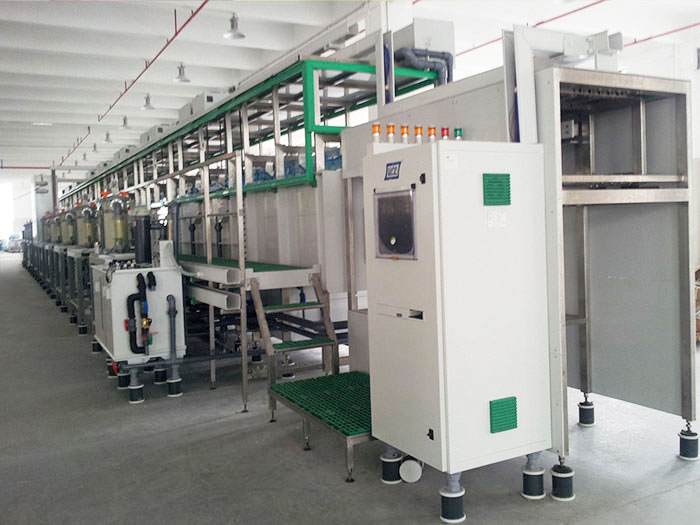
Over time, electroplating equipment needs maintenance. If not inspected or serviced, various issues are likely to arise. Generally, the cleaning of electroplating equipment is divided into physical cleaning and chemical cleaning!
Cleaning Scope
Physical cleaning refers to methods that use mechanical or hydraulic forces to remove dirt from the surface of electroplating equipment. Additionally, heat, electrical current, ultrasonic waves, and ultraviolet light are also used for cleaning. Therefore, any method that uses thermal, mechanical, optical, or electrical principles to remove surface dirt should be classified under physical cleaning.
Chemical cleaning refers to the use of chemicals or other aqueous solutions to remove surface dirt from objects. Common chemical cleaning methods include using various inorganic or organic acids to remove rust or scale from metal surfaces, using bleaching oxidants to remove stains, and using disinfectants and germicides to kill microorganisms and remove dirt or mold from the surfaces of objects.
Characteristics
The advantage of chemical cleaning is that many chemicals react quickly. However, the downside is that if the wrong cleaning solution is chosen, it can corrode the base material of the object being cleaned, causing damage.
Some chemical agents are liquids, usually used in the form of aqueous solutions. Since liquids have good flow and strong permeability, they can evenly spread across all cleaning surfaces, making them suitable for cleaning complexly shaped objects without "dead corners" that are hard to clean.
The wastewater produced by chemical cleaning is a major cause of environmental pollution. Therefore, chemical cleaning must be accompanied by wastewater treatment devices. Additionally, improper handling of chemical agents can harm the health and safety of workers.
Physical cleaning, in many cases, is dry cleaning, which does not involve wastewater disposal issues. Even when high-pressure washing with water is used, since the wastewater does not contain difficult-to-treat chemicals, it is easier to handle.
Compared to chemical cleaning, physical cleaning causes less environmental pollution and harm to workers' health. It also does not corrode or damage the base material of the cleaned object.
The disadvantage of physical cleaning is that, when cleaning the interior of equipment with complex structures, the force may not reach all areas evenly, resulting in "dead corners." In some cases, disassembling the equipment for cleaning may be necessary, causing production downtime and loss. To improve cleaning efficiency, appropriate power equipment may need to be added, and large space requirements can make handling inconvenient.
Because physical cleaning and chemical cleaning complement each other well, they are often combined in electroplating production lines to achieve better cleaning results.
For more information, please visit: Guangdong Jianzheng Mechanical and Electrical Electroplating Equipment Technology Co., Ltd.