Electropolishing and chemical polishing can be used as standalone surface treatment methods to replace mechanical polishing, or they can be used as preparation steps before electroplating. However, this method involves some degree of surface dissolution and may remove some sharp edges from the profile, so considerations should be made for the dimensional and shape tolerances when using it.
In addition to giving the surface a smooth and glossy finish, electropolishing and chemical polishing have other beneficial effects. For example, these methods are commonly used to eliminate surface cold-work hardening layers, reduce microscopic roughness, improve friction properties and reduce wear, increase magnetic permeability and reduce magnetic loss, remove sharp edges and burrs, expose metallographic structures, and check for microcracks and material defects. After electropolishing, material cracks and surface markings can become more visible, making it useful for inspecting these defects.
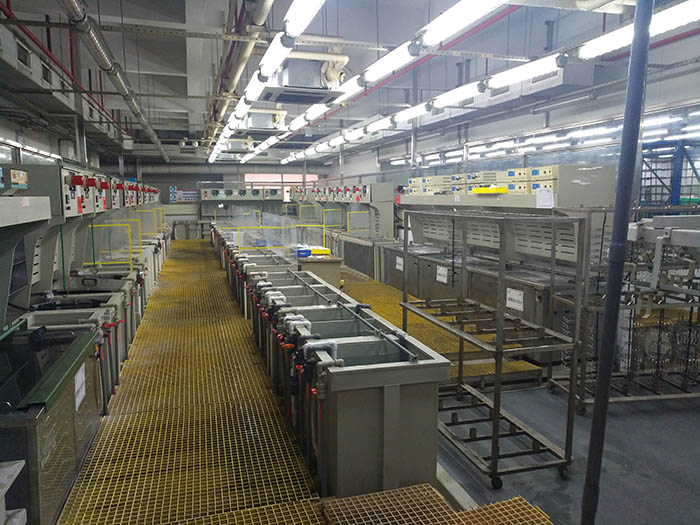
Electropolishing and chemical polishing differ from conventional mechanical methods. The polishing effect is actually related to the material's surface structure. Additionally, the polishing process typically involves dissolution, so it should not be done for too long. The polishing speed is also quite fast, making it effective for labor saving.
This method is more suitable for final finishing rather than rough polishing, and therefore works better when used in combination with preliminary mechanical processing. Chemical polishing avoids the need for the power supply and current distribution equipment required for electropolishing, especially since the current density used in electropolishing is often very high, leading to significant savings in investment. However, chemical polishing is more influenced by the material’s surface structure and may not be ideal for all situations. It is generally used as a final treatment to enhance gloss.
The basic electrolyte for electropolishing is commonly referred to as the "triple acid" universal polishing solution. This mixed acid is suitable for many different materials such as stainless steel, ordinary steel, copper, aluminum, and other non-ferrous metals. If the material is specific, the components can be adjusted accordingly, or some additives can be added.