What are the product features of using a fully automatic phosphating production line?
Fully Automatic Phosphating Production Line typically consists of components such as the tank body, frame, conveyor crane, piping system, oil-water separation system, phosphating filtration equipment (filter press), mist extraction system, heating system, and electrical control system. These components work in coordination to ensure the efficiency and stability of the phosphating process. Below is a detailed introduction:
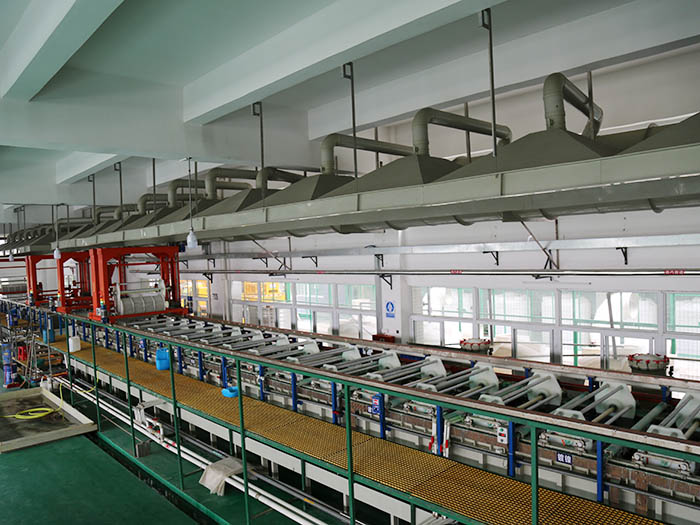
**High Automation**: The production line uses PLC control to manage the crane, which switches the lifting devices or rotating barrels within each tank according to the set process sequence and time. Both temperature and liquid level are automatically controlled. The production process strictly follows the process sequence and time, ensuring the quality of the phosphated products.
**Rational Structure**: The production line is designed rationally with a compact structure, occupying minimal space, and significantly improving the working environment.
**Energy-efficient and Environmentally Friendly**: The tank liquid is heated indirectly (via steam, fuel oil, or electric heating), with automatic temperature control. The system includes a stirring mechanism inside the tank to improve thermal efficiency. Additionally, the production line uses a fully enclosed circulation system to reduce wastewater discharge and environmental pollution.
**Easy Operation**: The system is controlled by a computer automation system, making the entire plating process seamless and user-friendly. Furthermore, the control circuitry is well-designed, using imported photoelectric proximity switches and limit switches for multi-level protection to ensure reliable operation.
**Strong Adaptability**: The production line can be customized based on the customer's process and capacity requirements, meeting the production needs of enterprises of different scales.