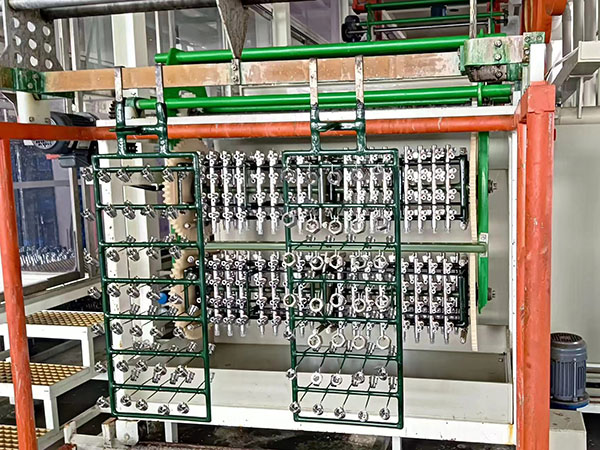
Electroplating Coating Production Line involves high voltage, highly corrosive chemicals, high-temperature environments, and harmful gases. Improper operation can lead to accidents such as electric shocks, chemical burns, fires, and explosions. To ensure the safety of personnel and equipment, strict management is required in the following areas:
1. **Electrical Safety Protection**
**Grounding and Leakage Protection**
- **Grounding System**: All electroplating equipment, metal frames, and conductive components must be reliably grounded, with ground resistance ≤ 4Ω, to prevent electric shock due to static accumulation or leakage.
- **Leakage Protectors**: Install leakage protection devices (with trip current ≤ 30mA, trip time ≤ 0.1s) at the main power switch and branch circuits, and regularly test their sensitivity.
**Insulation and Isolation Measures**
- **Insulated Gloves/Insulated Shoes**: When operating high-voltage equipment (such as rectifiers and power cabinets), insulated protective gear must be worn to avoid direct contact with live parts.
- **Isolation Barriers**: Set up protective barriers or warning signs in dangerous areas such as electroplating tanks and power cabinets to prevent unauthorized personnel from entering.
**Safety Operating Standards**
- **Power Off Before Maintenance**: Before performing maintenance, the power must be cut off, and a "Do Not Close" warning sign must be hung, with special personnel assigned for supervision.
- **No Operation with Wet Hands**: Operating electrical equipment in humid environments or with wet hands is strictly prohibited to prevent electric shock.
2. **Chemical Substance Safety Management**
**Chemical Storage and Labeling**
- **Classified Storage**: Acids, bases, oxidizers, reducers, etc., must be stored separately to avoid reactions (e.g., cyanide reacting with acid to form highly toxic hydrogen cyanide).
- **Clear Labeling**: All chemical containers must be labeled with the name, concentration, hazards, and emergency measures, using corrosion-resistant labels.
- **Ventilation Design**: Chemical storage areas must be equipped with forced ventilation, with explosion-proof exhaust fans to prevent the accumulation of harmful gases.
**Personal Protective Equipment (PPE)**
- **Protective Clothing**: Wear acid-resistant work clothing, aprons, and sleeves to prevent chemical splashes from corroding the skin.
- **Goggles/Faceshields**: Wear chemical splash goggles or full-face shields when handling strong acids, bases, or high-temperature solutions.
- **Respirators**: In poorly ventilated areas (such as enclosed electroplating tanks), wear a respirator (e.g., activated carbon filter canisters or air-supplied respirators).
**Leakage Emergency Handling**
- **Leakage Source Control**: Immediately close valves or transfer containers to prevent the leakage from spreading.
- **Neutralization Treatment**: Use sodium bicarbonate (baking soda) to neutralize acid leaks, and dilute acetic acid to neutralize alkaline leaks. It is strictly prohibited to rinse with water (which may spread the contamination).
- **Collection and Disposal**: Use absorbent materials (such as sand or vermiculite) to collect leaks, and dispose of them according to hazardous waste handling procedures.
3. **Fire and Explosion Prevention Measures**
**Ignition Source Control**
- **No Fire Zones**: Smoking and open flames are strictly prohibited in the electroplating workshop. Any hot work must be approved and equipped with fire extinguishing equipment.
- **Explosion-Proof Equipment**: Use explosion-proof electrical switches, lamps, and ventilation equipment to prevent electrical sparks from causing explosions.
**Flammable Material Management**
- **Organic Solvents**: Solvents such as alcohol and acetone must be stored separately in fireproof cabinets, away from heat sources and oxidizers.
- **Gas Detection**: Install hydrogen concentration detectors in areas where hydrogen may be produced (e.g., zinc plating, nickel plating). The system will automatically alarm and initiate ventilation if the concentration exceeds the limit.
**Fire Extinguishing Equipment**
- **Type Selection**: Choose fire extinguishers based on the type of fire (e.g., dry powder extinguishers for electrical fires, carbon dioxide extinguishers for precision equipment).
- **Regular Inspection**: Check fire extinguishers’ pressure gauges, nozzles, and expiration dates monthly to ensure they are in working condition.
4. **High Temperature and Mechanical Safety**
**High-Temperature Protection**
- **Thermal Gloves**: Wear heat-resistant gloves when operating high-temperature equipment (such as drying ovens or molten metal tanks) to prevent burns.
- **Warning Signs**: Place "High Temperature Hazard" signs in high-temperature areas to prevent personnel from making contact.
**Mechanical Safety Protection**
- **Protective Covers**: Install protective covers on moving parts (such as pulleys and gears) to prevent clothing or limbs from being caught.
- **Emergency Stop Devices**: Install emergency stop buttons at key positions on automatic production lines to immediately shut down the system in case of emergency.
5. **Personnel Training and Emergency Management**
**Safety Training**
- **New Employee Training**: New employees must undergo safety operation procedure training, chemical hazard awareness, and emergency handling training before they can operate independently.
- **Regular Retraining**: Organize safety knowledge update training annually to strengthen employees' safety awareness.
**Emergency Drills**
- **Simulated Drills**: Organize emergency drills for electric shocks, chemical leaks, fires, etc., every quarter, to ensure employees are familiar with evacuation routes and the use of emergency equipment.
- **Emergency Supplies**: Equip the workshop with first-aid kits (containing burn cream, disinfectants), emergency flushing devices (such as eye wash stations and showers), and emergency communication equipment.
**Health Monitoring**
- **Regular Physical Exams**: Conduct occupational health check-ups for employees who are frequently exposed to chemicals, focusing on skin, respiratory, and blood health.
- **Job Rotation System**: Avoid employees working in high-risk positions for extended periods to reduce the risk of occupational diseases.
6. **Environmental and Waste Management**
**Wastewater Treatment**
- **Classified Collection**: Separate wastewater containing heavy metals (such as chromium, nickel) from regular wastewater to avoid cross-contamination.
- **Standard Discharge**: Wastewater must be treated (e.g., through chemical precipitation, ion exchange) to meet discharge standards before being released, and direct discharge is strictly prohibited.
**Waste Gas Treatment**
- **Local Exhaust**: Install local exhaust hoods in areas where harmful gases are produced (such as electroplating tanks and drying ovens), directing the waste gases to purification devices (such as acid mist absorption towers).
- **Regular Testing**: Commission third-party agencies to test the air quality in the workshop to ensure it meets occupational health standards.
**Hazardous Waste Disposal**
- **Classified Storage**: Hazardous wastes such as waste plating solution, waste filters, and waste absorbent materials must be stored in dedicated containers and clearly labeled as hazardous waste.
- **Compliant Disposal**: Commission qualified organizations to carry out harmless treatment of hazardous waste, and it is prohibited to dispose of or burn the waste randomly.