Fully Automated Progressive Production Line (understood as a fully automated production line combined with progressive production logic) has core advantages summarized as improved efficiency, optimized costs, quality assurance, flexible adaptability, and management upgrades. The specific analysis is as follows:
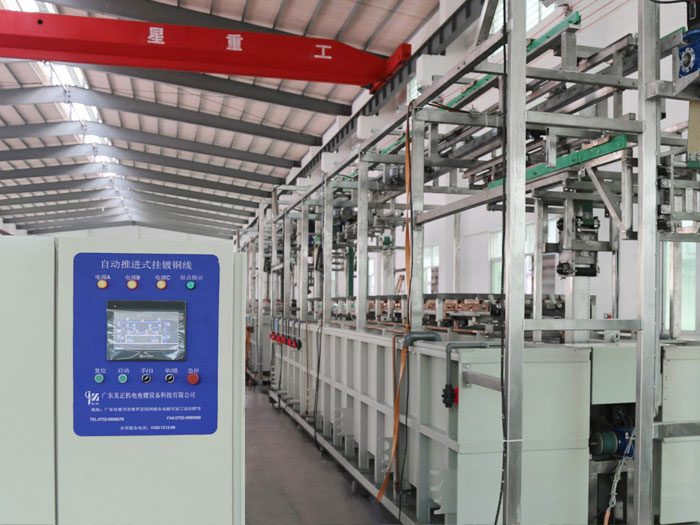
1. Significant Improvement in Production Efficiency
High-Speed Continuous Operation: The fully automated production line integrates mechanical structure, sensor systems, and intelligent control software, achieving full-process unmanned operation from feeding, processing, inspection, to packaging. The equipment can run 24 hours without interruption, greatly reducing the production cycle for each product, with capacity improvements typically reaching 2-5 times that of manual production, especially suitable for large-scale, standardized product manufacturing.
Plan-Driven Continuity: The progressive production is driven by a pre-established plan, with coordination of each production stage through the MRP (Material Requirements Planning) system to ensure the production process follows the planned linear progression (e.g., "Procurement → Processing → Assembly → Storage → Distribution"). This model, especially for standardized mass production scenarios (such as daily goods, electronics), enables efficient mass production through long-term planning, reducing the risk of production interruptions.
2. In-Depth Cost Structure Optimization
Reduction in Labor Costs: The fully automated production line replaces a large number of repetitive manual positions, alleviating labor shortage and instability issues, while simplifying personnel management. For example, after adopting the fully automated intelligent production line, one company reduced labor costs by 40%-80%, requiring only 1-2 operators to manage the entire line.
Improved Resource Utilization Efficiency: Progressive production coordinates resources (labor, equipment, materials) through centralized planning, optimizing capacity utilization and reducing unit production costs. For example, in the automotive manufacturing industry, the adoption of progressive production improved equipment utilization and significantly reduced energy consumption and material waste per unit product.
Reduction in Hidden Costs: The fully automated production line minimizes human error, reducing defect rates and rework costs. The progressive production’s inventory buffering strategy can address short-term demand fluctuations, avoiding supply chain disruptions and further controlling supply chain costs.
3. Stable and Controllable Product Quality
Standardized Execution: The fully automated production line uses servo control, visual inspection, and sensor monitoring technologies to ensure consistency in product dimensions, appearance, and performance. For example, in motor component manufacturing, the system can perform high-precision processes such as rotor dynamic balancing and end cap pressing, significantly reducing the product defect rate.
Quality Traceability System: The fully automated production line integrates a data collection system for real-time monitoring of production status and quality traceability. Some systems are equipped with process databases that store production data for quality analysis, providing a basis for continuous improvement.
4. Enhanced Flexible Production Capability
Modular Design: Modern fully automated production lines adopt a modular structure, supporting quick changeovers and functional expansion. For example, the automated production line provided by Guanshengtai can customize personalized solutions based on product processes, achieving smooth, stable, and efficient operation from automatic feeding to packaging.
Push-Pull Hybrid Mode: To compensate for the slower market response of progressive production, many companies adopt a "push-pull" strategy.
5. Intelligent Management Upgrades
Data-Driven Decision Making: The fully automated production line integrates MES systems, IoT, and big data analysis technologies to enable real-time collection, analysis, and processing of production data. For example, one company introduced an information management system that improved production efficiency by 30%, while also providing data support for decision-making.
Risk Early Warning Capability: The intelligent control system dynamically monitors equipment operating parameters, identifies potential faults in advance (e.g., compressor overload, sensor anomalies), reducing unplanned downtime and ensuring continuous production.