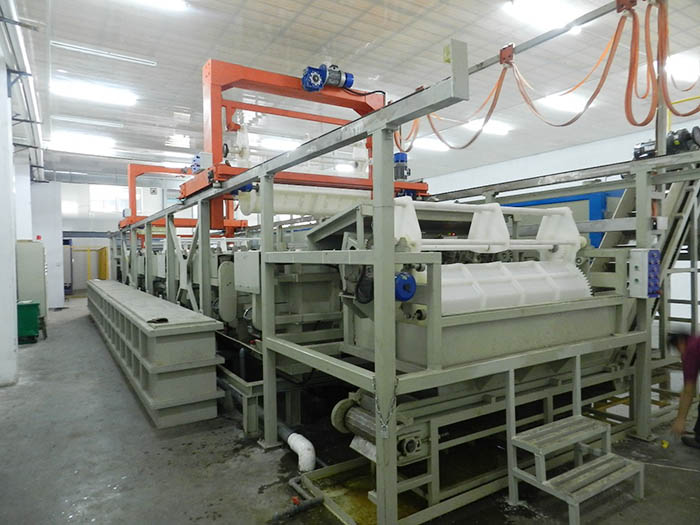
The ferrous sulfate method and sodium bisulfite method are the most commonly used methods for treating wastewater containing hexavalent chromium. However, their treatment processes are distinctly different. Researchers from the School of Mechanical and Automotive Engineering at South China University of Technology and Huaiji Dengyun Auto Parts Co., Ltd. conducted experimental studies and comparisons, highlighting that using appropriate methods for different scenarios can achieve better overall results, thus providing a reference for the treatment of electroplating chromium wastewater in practical production.
Both ferrous sulfate and sodium bisulfite can effectively treat electroplating chromium wastewater. However, the ferrous sulfate method is more economical, simple to operate, and highly efficient, though it generates more sludge. The sodium bisulfite method's main advantage is the smaller amount of sludge produced, but it is slightly more expensive and takes longer to process.
Since the ferrous sulfate method does not require pH adjustment before treatment and is more efficient, it is better suited for continuous treatment scenarios where a large amount of wastewater is produced. On the other hand, the sodium bisulfite method takes longer, is more complex to operate, but generates less sludge, making it more suitable for small electroplating plants with moderate wastewater amounts that need periodic treatment.