Automatic Steel Strip Production Line is a continuous, high-efficiency metal processing equipment. During its operation, it is crucial to strictly avoid the following key issues to ensure production safety, product quality, and equipment longevity:
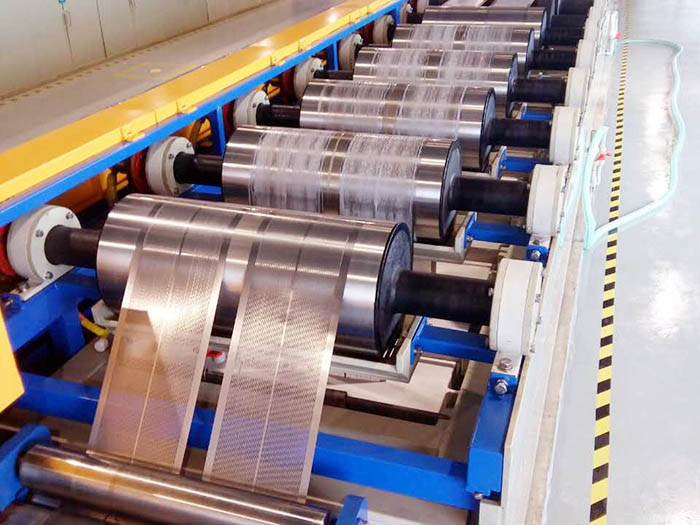
**I. Equipment Operation Safety Risks**
**Mechanical Injury Protection**
- Exposed Rotating Parts: Components such as rollers, gears, and shafts must be equipped with protective covers to prevent operators from getting caught or cut.
- Pinch and Compression Risks: Safety light curtains or emergency stop buttons should be installed in areas such as the guide rollers and tensioning devices to prevent body parts from being trapped.
- High-Temperature Surface Burns: High-temperature warning signs should be placed around the heating furnace and heat treatment equipment, and heat-resistant gloves should be provided for protection.
**Electrical Safety Standards**
- Grounding and Leakage Protection: Regularly check equipment grounding resistance (≤4Ω) to ensure the leakage protection device is sensitive and reliable (trigger current ≤30mA).
- Cable Damage Inspection: Focus on checking cables in movable parts (e.g., tensioning devices, rewinders) for wear to avoid short circuits that could lead to fires.
- Operation Permission Management: Non-professional personnel are prohibited from operating the control cabinet to prevent equipment malfunctions caused by accidental touch.
**Hydraulic/Pneumatic System Hazards**
- Pressure Abnormality Monitoring: Install pressure sensors to monitor hydraulic system pressure in real time. When exceeding preset pressure (e.g., 20MPa), automatically release pressure and alarm.
- Pipe Aging Inspection: Check hydraulic pipes for cracks and leaks quarterly, especially in high-temperature areas (e.g., hot-rolled sections).
- Pneumatic Component Maintenance: Regularly clean the pneumatic triplet (filter, pressure valve, oil mist separator) to prevent impurities from entering the actuators and causing jamming.
**II. Steel Strip Quality Defect Control**
**Surface Damage Prevention**
- Guide Roller Surface Condition: Use chrome-plated or ceramic-coated guide rollers with a surface roughness of Ra≤0.8μm to avoid scratching the steel strip.
- Tension Fluctuation Control: Use tension sensors and inverters to control tension fluctuations within ±5% to prevent steel strip stretching or wrinkling.
- Foreign Object Intrusion Prevention: Install magnetic filters and felt dust removal devices at the steel strip inlet to remove metallic chips, oil, and other impurities.
**Dimensional Precision Assurance**
- Roll Wear Monitoring: Use laser thickness gauges to monitor steel strip thickness in real time. When thickness deviation exceeds ±0.05mm, automatically adjust roller gaps.
- Cooling System Uniformity: Optimize the layout of spray cooling devices to ensure uniform cooling rates across the steel strip width to avoid local deformation.
- Rewind Tension Gradient: Set the rewind tension curve according to the steel strip specifications (e.g., decreasing tension for thin strips) to prevent inter-layer slippage and collapse.
**Process Parameter Stability**
- Temperature Closed-Loop Control: The heating furnace uses a PID temperature control system to keep temperature fluctuations within ±3°C to prevent grain coarsening or insufficient hardness.
- Speed Synchronization Matching: Use encoders to synchronize the unwinding, rolling, and rewinding speeds, with a speed difference ≤0.5%, to prevent stretching or steel accumulation.
- Lubricant Concentration Management: Regularly test the emulsion concentration (e.g., 3%-5%), and automatically add concentrated solution when the concentration is insufficient to prevent increased roller wear.
**III. Production Process Management Points**
**Material Connection Optimization**
- Unwinder Residual Control: When the remaining diameter of the steel coil ≤300mm, switch to the backup coil in advance to prevent production interruptions due to broken strips.
- Weld Seam Quality Inspection: Use laser welding or plasma welding, with seam strength exceeding 90% of the base material, and perform ultrasonic testing.
- Buffer Device Adjustment: Set the active loop tower storage capacity (e.g., ≥50m for high-speed lines) to prevent speed fluctuations leading to steel accumulation or breakage.
**Equipment Start/Stop Procedures**
- Low-Speed Preheating Phase: For cold starts, run at 5m/min for 10 minutes until the lubricating oil temperature reaches 40°C, then gradually increase to normal speed.
- Deceleration Cooling Program: Gradually reduce speed to 10m/min before shutdown, while keeping the cooling system running for 15 minutes to prevent thermal stress cracking of the rollers.
- Emergency Stop Handling: Trigger the emergency stop button immediately in case of strip breakage and activate the break detection device to locate the fault point and prevent steel coil entanglement.
**Personnel Operation Standards**
- Area Isolation Management: Use safety barriers to separate the operation area, maintenance area, and material area, prohibiting unauthorized personnel from entering the operating zone.
- Visualization Board Application: Set up a production parameter board in the control room to display key indicators such as tension, speed, and temperature in real-time, with automatic alarms for abnormalities.
- Standardized Operating Instructions: Develop SOPs (Standard Operating Procedures) for equipment operation, detailing the frequency and standards for inspections, lubrication, roller replacement, etc.
**IV. Environmental and Maintenance Requirements**
**Workshop Environment Control**
- Temperature and Humidity Regulation: Maintain workshop temperature between 15-30°C, and humidity ≤65%, to prevent electrical component short circuits or steel strip rusting.
- Dust Concentration Limit: Install dust collection systems to control metallic dust concentration in the air to ≤5mg/m³, preventing health issues for operators.
- Lighting Intensity Standards: Ensure illumination in operation areas is ≥300lux and ≥500lux in maintenance areas for clear visibility.
**Preventive Maintenance Plan**
- Daily Inspection Items: Check oil levels, air pressure, and the effectiveness of safety devices, recording equipment operation parameters.
- Weekly Maintenance: Clean guide rollers, replace lubrication oil filters, and inspect electrical connections for tightness.
- Monthly Maintenance Focus: Measure radial run-out of rollers (≤0.02mm), calibrate sensor accuracy, and check the hydraulic system's sealing.
**Spare Parts Inventory Management**
- Key Spare Parts List: Stock key consumables such as rollers, bearings, and sensors, with enough inventory for at least one major overhaul.
- Spare Parts Lifecycle Tracking: Establish a spare parts usage record, including replacement times and running hours, predicting remaining lifespan and purchasing in advance.
- Supplier Response Mechanism: Sign emergency supply agreements with spare part suppliers to ensure delivery within 4 hours in case of sudden failures.